

KIDNAPPED AT SEA
ANDREW SILLEN
 The true story of David Henry White, a
free Black teenage sailor enslaved on the high seas during the Civil War, whose life was
falsely and intentionally appropriated to advance the Lost Cause trope of a contented slave,
happy and safe in servility.
The true story of David Henry White, a
free Black teenage sailor enslaved on the high seas during the Civil War, whose life was
falsely and intentionally appropriated to advance the Lost Cause trope of a contented slave,
happy and safe in servility.
KIDNAPPED AT SEA
The civil war voyage of David Henry White
David Henry White, a free Black teenage sailor from Lewes, Delaware, was kidnapped by Captain Raphael Semmes of the Confederate raider Alabama on October 9, 1862, from the Philadelphia-based packet ship Tonawanda. White remained captive on the Alabama for over 600 days, until he drowned during the Battle of Cherbourg on June 19, 1864.
In a bestselling postwar memoir, Semmes falsely described White as a contented slave
who remained loyal to the Confederacy. In Kidnapped at Sea, archaeologist Andrew Sillen uses a
forensic approach to describe White's enslavement and demise and illustrates how White's actual life
belies the Lost Cause narrative his captors sought to construct.
Kidnapped at Sea is the first book to focus on White's actual life, rather than relying on
Semmes and other secondary sources. Until now, Semmes's appropriation of White's life has escaped
scrutiny, thereby demonstrating the challenges faced by disempowered, illiterate people—and how
well-crafted, racist fabrications have become part of Civil War memory.
Praise for Kidnapped At Sea
Anyone who has read Percival Everett’s… novel James will welcome this fresh take.
— Journal of Southern History…joins the pantheon of great Civil War scholarship… a stirring tale of historical forensics.
— Booklist, American Library AssociationIn this fast-paced narrative, Andrew Sillen uncovers the astounding story of David White, a free Black teenager kidnapped from a US ship and forced to accompany the Confederate raider Alabama. Through a haunting account, Sillen restores White's humanity and in doing so provides a timely examination of the necessity for addressing historical crimes.
— Caroline E. Janney, author of Ends of War: The Unfinished Fight of Lee's Army after AppomattoxThis book represents the best in weaving a compelling narrative across generations, geographies, and genres by an archeologist who has effectively used the perspective of his discipline to connect a young Black man's short life to the horrors of piracy, slavery, and colonial conquest.
— Mamphela Ramphele, author of Dreams, Betrayal and HopeThis well-researched and captivating account of the Civil War Battle of Cherbourg commands the attention of Naval and Civil War scholars alike. The embedded story of the teenage sailor David Henry White is effectively used by the author for a revealing analysis of personal, professional, and moral strengths and flaws of all involved.
— Adm. David Brown, U.S. Maritime Service (Ret.)What Sillen has done with Kidnapped at Sea is truly monumental. David Henry White's soul is somewhere between here and heaven, grateful to Sillen for finding the facts, telling his story, and honoring his dignity.
— Teresa H. Clarke, Chairman & CEO, Africa.comKidnapped at Sea is masterful and engrossing. The sharp focus on the 'invisible' David Henry White vividly conveys the plight of the enslaved. It makes the reader care far more than a conventional history. In its methodology, it is akin to the way Anne Frank's diary made the reader see and understand the Holocaust more than all of the recitals of facts and numbers. A stunning professional accomplishment.
— Roy FurmanIn this gripping story, Andrew Sillen rescues from Lost Cause mythology the story of David Henry White, a free Black man kidnapped and enslaved on board the CSS Alabama for 600 days before his untimely death. In the process, Sillen offers an important reminder that the struggle for a 'new birth of freedom' was fought as much on the high seas as it was on the battlefield.
— Kevin M. Levin, author of Searching for Black Confederates: The Civil War's Most Persistent MythSillen’s Kidnapped at Sea adds new evidence-based arguments that anyone researching the CSS Alabama must explore. More importantly, it returns humanity and agency to David Henry White, an illiterate teenage freeman who found himself impressed into Confederate service until his death.
— Neil P. Chatelain, Assistant Professor of History, Lone Star College—North Harris CampusArticles and Podcasts



The African Americans in the Civil War Era Round Table
https://www.aacwert.org/home

Kidnapped at Sea: The Civil War Voyage of David Henry White
Article
https://epubs.ac.za/index.php/newagenda/article/view/2740/1879

Democracy in crisis: America and South Africa’s parallel paths
Article
https://www.inquirer.com/opinion/commentary/demography-democracy-race-politics-usa-south-africa-1980s-20250319.html
Kidnapped at Sea | Alabama Public Radio
Article
https://www.apr.org/show/don-nobles-book-reviews/2025-02-24/kidnapped-at-sea

The Forgotten Kidnapping of David Henry White: Andrew Sillen Restores a Lost History — RJ GROOMS ART & COMMUNICATIONS
Article
https://www.ronnyjoegrooms.com/ronnyjoegroomsblog/2025/2/10/correcting-the-record-andrew-sillen-on-the-forgotten-kidnapping-of-a-free-black-teen


Kidnapped at Sea with Andrew Sillen PhD - SoundCloud
Article
https://www.military.com/off-duty/books/2025/01/27/kidnapped-sea-dispels-old-sea-story-of-black-sailor-confederate-navy.html


Civil War Notebook
Article
https://civilwarnotebook.blogspot.com/2025/01/review-kidnapped-at-sea.html

Civil War Talk Radio
Podcast | 10/16/2024 | 1h
https://podcasts.apple.com/us/podcast/2107-andrew-sillen-kidnapped-at-sea-the-civil-war/id443517292?i=1000673506259

The Tattooed Historian Show
Podcast
https://creators.spotify.com/pod/show/thetattooedhistorian/episodes/Kidnapped-at-Sea-David-Henry-White--the-CSS-Alabama-e2pk3ni
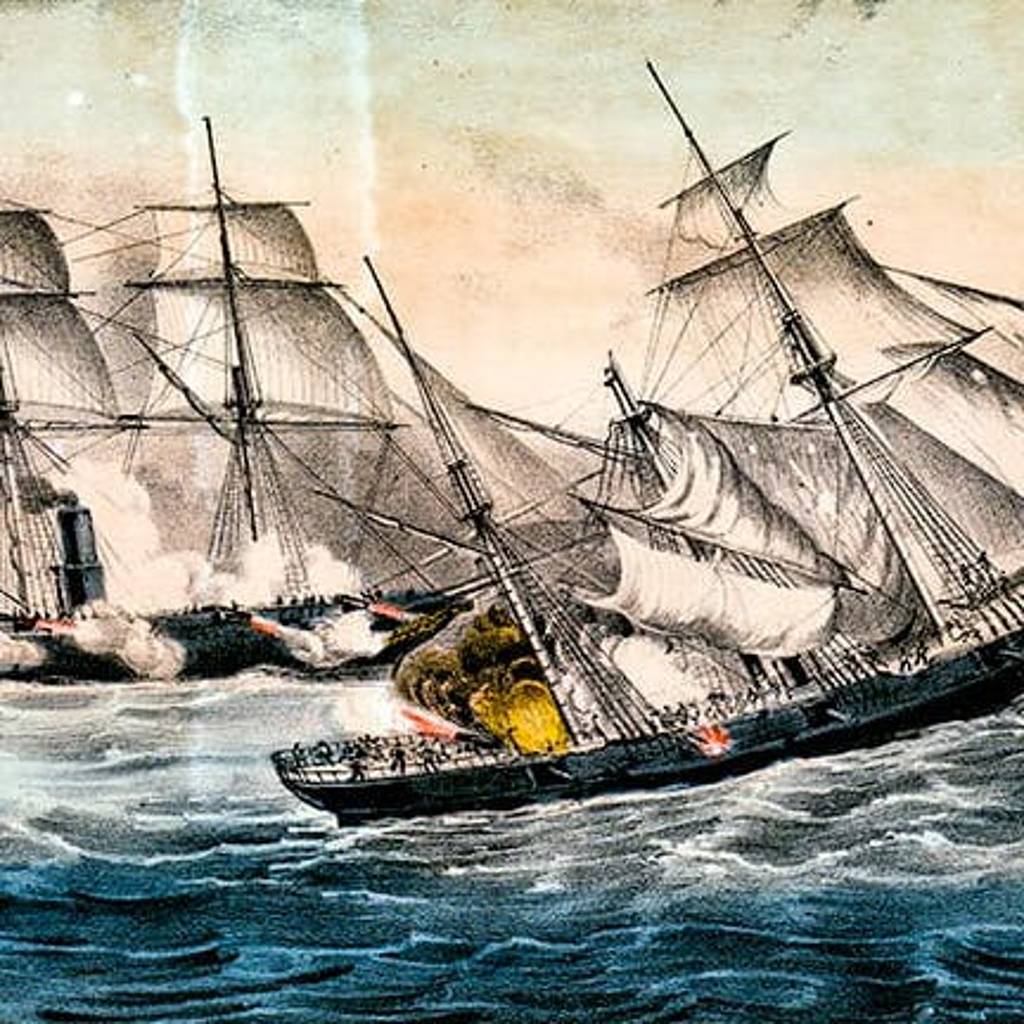
Shipwrecks and Sea Dogs
Article
https://shipwrecksandseadogs.com/blog/2024/10/19/kidnapped-at-sea-david-henry-white/


The Author’s Corner with Andrew Sillen
Article
https://currentpub.com/2024/10/11/the-authors-corner-with-andrew-sillen/

Sample
A sample from Kidnapped At Sea
While the gaps in White’s life story may seem frustrating, the fragments that remain provide
something just as important: evidence that whatever his story was, he never got to tell us, and
what Semmes conveyed about him years after his death, were by any standard, deliberate
lies.
In this book I have sought to adhere to the limited documentary record, and to squeeze every
last ounce of juice from it, in order to expose the lies through which White’s short life was
appropriated and used to construct a False Cause narrative.
In telling his story, beyond the documentary record specific to White, only information
generally applicable to young Black sailors of his time and place was used to provide the
necessary context.
While there is no way to know what White thought, there is much to say about what he
experienced, and so the key places he lived and visited are described, as well as the people he
most certainly encountered. Along the way, some key incidents and accounts from American history
help us understand the forces amassed against him. Perhaps the closest we can come to knowing
him is to imagine ourselves in his situation.


The Voyage

Captures
Data from Semmes, Raphael, Logbook of the Alabama, Alabama Department of History and Archives, and Official Records of the Union and Confederate Navies in the War of the Rebellion, Series I: Vol 3
Updates
Prior to publication, but after printing, the following errors were noted, which will be corrected in subsequent printings:
p. 231, 238: ‘sun-dry’ should read ‘sundry’
p. xiii: “double identity” should read: “double consciousness”.
p. 41: (Figure 4.2 caption): White in “Portage Bill of Ship Tonawanda from Liverpool, 36 th Voyage of the Tonawanda”…” should read: “White in Portage Bill of Ship Wyoming’s 48th voyage from Boston…”
p. 67: …the only U.S. Navy ship to have court-marshalled purported mutineers at sea and hanged them from the yardarm. should read: …the only U.S .Navy ship to have hanged purported mutineers from the yardarm without trial.
p. 110: (Map 2): The end of the voyage should read June 19, 1864.
p. 128: “The article quoted Captain Julius…” should read: “The article misquoted Captain Julius…”
p. 131: (bottom of page): “The article also contained the following passage, quoting Captain Julius”
should read: “The article also contained the following passage, misquoting Captain Julius”
p. 233: (see map 1) should read (see map 2)
p. 20: “Dutch East India Company” should read “Dutch West India Company”
Selected Publications
2025 Sillen, A., Dean, C. & Balter, V., Geochemical chronologies in Paranthropus robustus teeth inform habitat and life histories. Nat Ecol Evol. https://doi.org/10.1038/s41559-025-02798-1
2025 Sillen, Andrew, Democracy in crisis: America and South Africa’s Parallel Paths, Philadelphia Inquirer. March 19, 2025.
2024 Sillen, Andrew, The Cope Line Voyages of David Henry White; Evidence From the Cope Family Archive, The Pennsylvania Magazine of History and Biography, 148:1,1-20
2018 Sillen, A. & Balter, V., Strontium isotopic aspects of Paranthropus robustus teeth; implications for habitat, residence, and growth, Journal of Human Evolution 114:118-130
1998 Sillen, A., Hall, G., Armstrong, R.A., & Richardson, S. 87 Sr/ 86 Sr in modern and fossil foodwebs of the Sterkfontein Valley, Geochimica et Cosmochimica Acta 62:2463-2473.
1996 Experimenting with the Pleistocene: The Reconstruction of Early Hominid Diets and Habitats in Southern Africa. Cape Town, University of Cape Town Inaugural Lecture Series No. 199.
1996 Sillen, A., ‘Parkington, J.E. Diagenesis of bones from Eland's Bay Cave Journal of Archaeological Science 23:535-542.
1994 Sillen A., ‘Lee-Thorp, J.A., Trace element and isotopic aspects of predator-prey relations in terrestrial foodwebs. Palaeogeography, Palaeoclimatology, Palaeoecology 107:243-256.
1990 Sillen A. ‘Brain, C.K., Old Flame. Natural History 4/90:6-12.
1988 Brain C.K. & Sillen, A., Evidence from the Swartkrans cave for the earliest use of fire. Nature 336:464-466.
1987 Sillen, A., ‘South Africa students feel the whip", Philadelphia Inquirer, (May 27), Op-Ed page
1982 Sillen, A. ‘Kavanagh, M., Strontium and paleodietary research: a review. Yearbook of Physical Anthropology 25:67-90.
1981 Sillen, A., Strontium and diet at Hayonim Cave, American Journal of Physical Anthropology 56:131-138.
